

Types of Skin Cancer: BCC, SCC, and Melanoma Explained
Not all skin cancers are the same. The three types most commonly diagnosed in Australia differ in how they look, where they appear, how quickly they grow, and how serious they become without treatment.
Understanding the differences matters. It affects how you recognise warning signs, how urgently you should act on a change, and what a clinical assessment is likely to involve. This guide covers each type in plain terms, including what to look for, who is most at risk, and when to book a check.
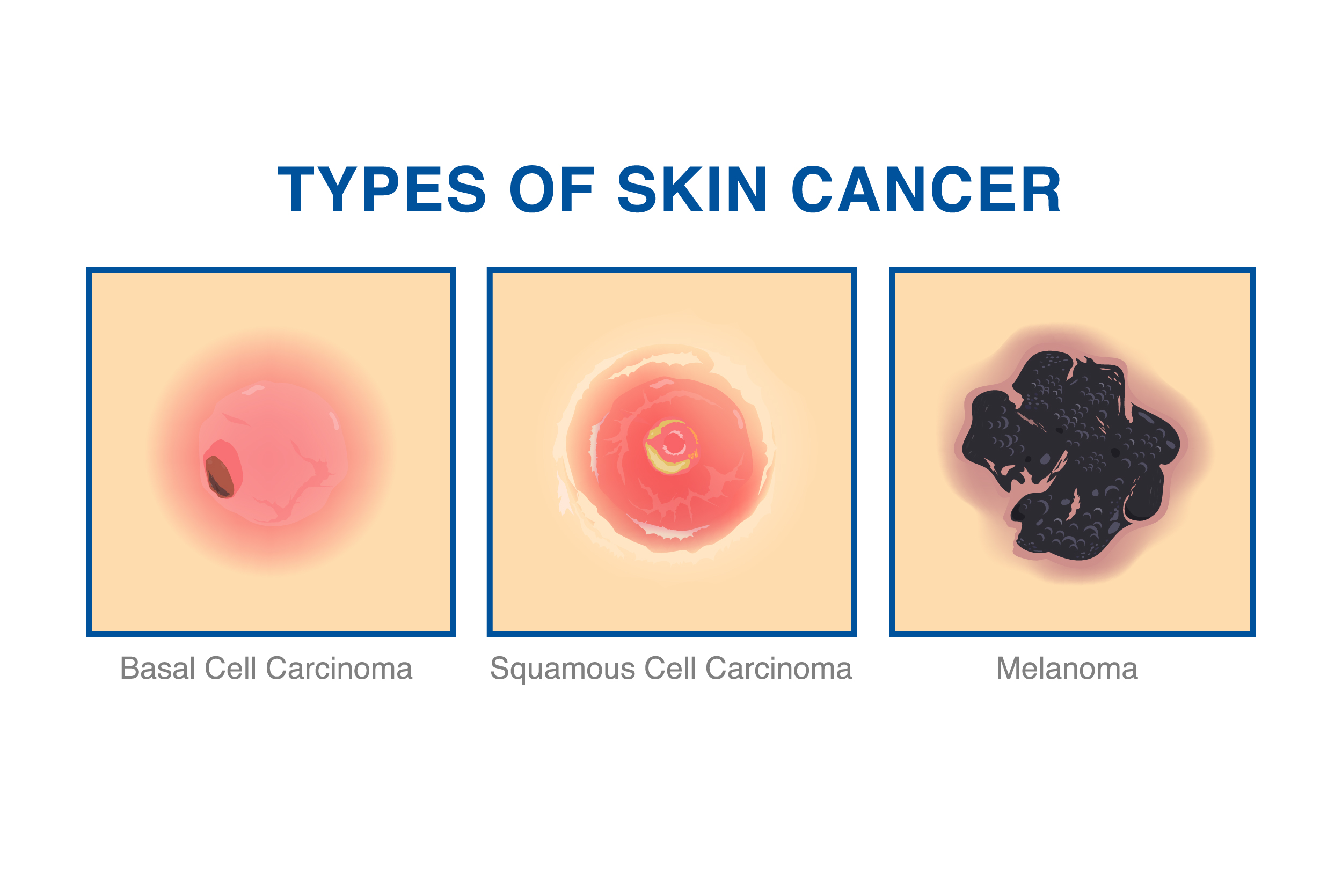
Basal Cell Carcinoma (BCC): The Most Common Type
Basal Cell Carcinoma is the most common form of skin cancer in Australia, accounting for roughly 70 per cent of all diagnoses. It develops in the basal cells, which sit at the base of the outer layer of skin (the epidermis). Though BCC grows slowly, it is not harmless if left untreated. Without treatment, it can grow deeper into the skin, damaging surrounding tissue, nerves, and bone.
What BCC looks like
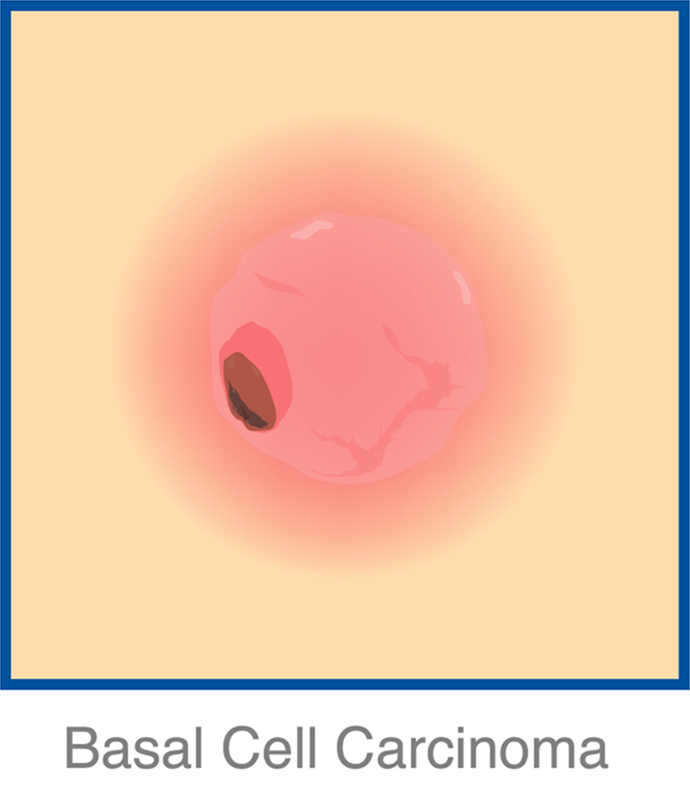
BCC does not always look the same. Common presentations include:
- A pearly or waxy bump, often with small visible blood vessels, on the face, ears, or neck
- A flat, flesh-coloured or brown lesion that resembles a scar
- A bleeding or scabbing sore that heals and then returns
- A pink growth with raised edges and a crusted centre
BCC most commonly appears on areas that receive the most lifetime sun exposure: the face, ears, scalp, neck, and shoulders. It can also appear on the trunk or legs, particularly in people who have spent significant time outdoors.
Who is most at risk
BCC is strongly associated with cumulative UV exposure over a lifetime. People with fair skin, a history of sunburn, or a pattern of significant outdoor work or recreation carry higher risk. A personal or family history of BCC also increases the likelihood of future diagnoses.
Squamous Cell Carcinoma (SCC): Know the Warning Signs
Squamous Cell Carcinoma is the second most common skin cancer in Australia. It develops in the squamous cells, which make up most of the skin’s outer surface. Unlike BCC, SCC carries a greater risk of spreading to lymph nodes and other organs if it is not treated promptly, particularly in people with weakened immune systems.
The overall risk of spread is still relatively low when SCC is caught early. The concern arises when it goes undetected or untreated for an extended period.
What SCC looks like
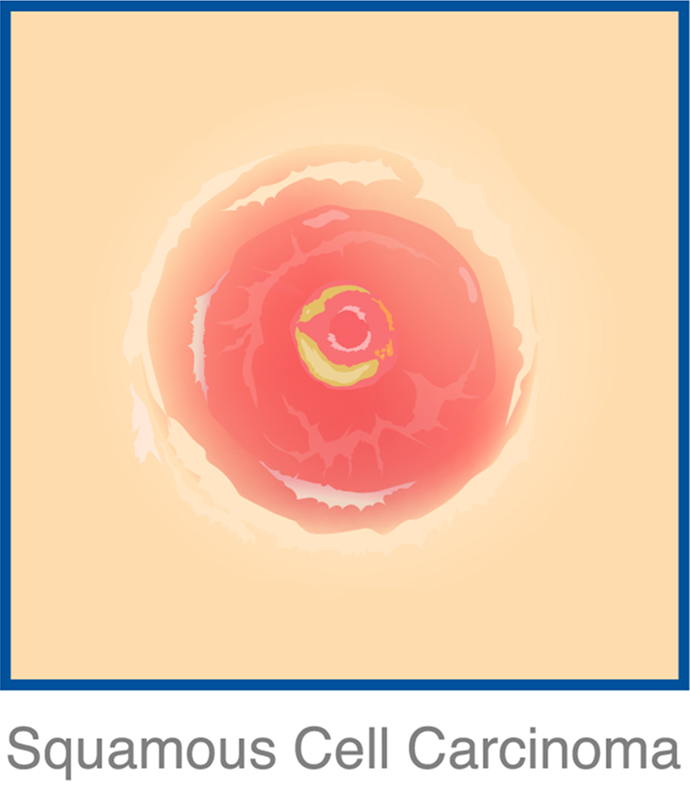
SCC can present in several ways:
- A firm, red nodule on the face, ear, lip, or back of the hand
- A flat lesion with a rough, scaly, or crusted surface
- A new sore or raised area developing on old scar tissue
- A rough, scaly patch on the lower lip
- A red sore or persistent rough patch inside the mouth
Actinic keratosis (sometimes called a solar keratosis) is a rough, scaly patch caused by years of sun exposure. It is considered a precancerous lesion and can progress to SCC if left untreated. If you have a rough, persistent patch that does not resolve, it is worth having it assessed.
Who is most at risk
SCC risk increases with cumulative UV exposure and is higher in people who have had organ transplants or are immunocompromised, including those on long-term immunosuppressant medications. People with a history of actinic keratosis or previous SCC diagnosis require ongoing skin monitoring.
Melanoma: The Most Serious Form of Skin Cancer
Melanoma develops in the melanocytes, the cells responsible for producing skin pigment. It is less common than BCC or SCC but significantly more dangerous, because it can spread to lymph nodes and internal organs relatively quickly if it is not caught early. Australia has one of the highest melanoma rates in the world. The Cancer Council Australia reports more than 15,000 new melanoma diagnoses each year, with melanoma accounting for more deaths than any other skin cancer.
Despite this, melanoma is highly treatable when detected at an early stage. The five-year survival rate for localised melanoma (where it has not spread beyond the skin) is approximately 98 per cent, according to the Australian Institute of Health and Welfare. The survival rate drops substantially once the cancer has spread.
What melanoma looks like
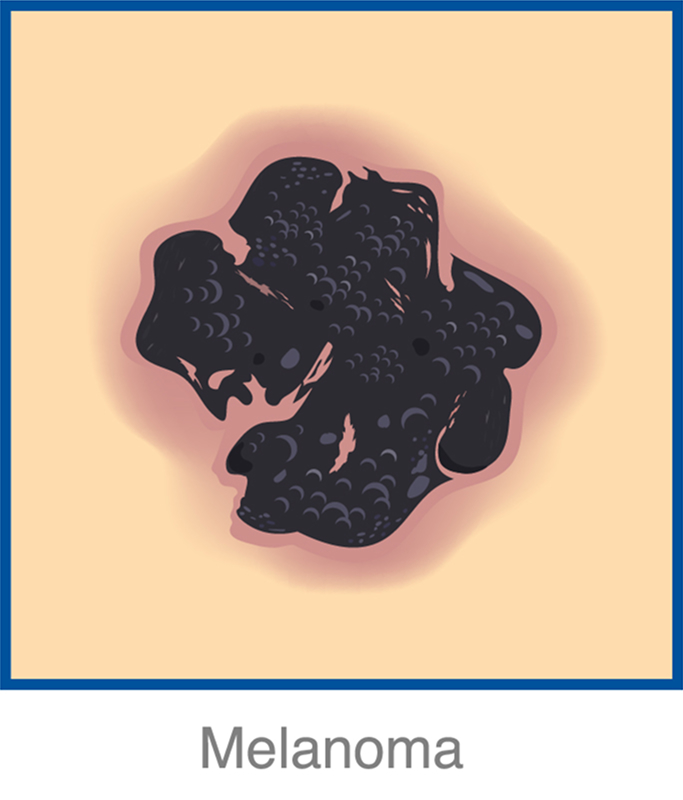
Melanoma often develops from an existing mole or appears as a new dark spot on the skin. The ABCDE rule is the most widely used framework for identifying warning signs. See our guide How to Tell if a Mole is Cancerous for a detailed breakdown of each criterion.
Key features to look for:
- Asymmetry: one half of the mole does not match the other
- Border: irregular, ragged, notched, or blurred edges
- Colour: multiple shades within one mole, including brown, black, red, pink, white, or blue
- Diameter: larger than 6mm, though melanomas can be smaller when first detected
- Evolution: any change in size, shape, colour, or sensation, including bleeding or itching
Melanoma can appear anywhere on the body, including areas that are rarely or never exposed to the sun. In men, it most commonly appears on the back. In women, it is more frequently found on the legs.
Nodular melanoma
Nodular melanoma is a faster-growing subtype that does not always follow the ABCDE pattern. It may appear as a raised, dome-shaped bump that is uniform in colour: pink, red, or brown rather than dark. Because it does not look like a typical suspicious mole, it can be harder to identify without a clinical assessment. Any new raised lesion that grows quickly should be checked promptly.
BCC, SCC, and Melanoma: How They Compare
The table below summarises the key differences between the three main types of skin cancer.
| Feature | BCC | SCC | Melanoma |
|---|---|---|---|
| How common | Most common | Second most common | Less common, most serious |
| Typical appearance | Pearly bump, flat or pink lesion | Firm red nodule, scaly patch | Irregular node, dark or multi-coloured spot |
| Most common locations | Face, neck, ears, scalp | Face, ears, hands, forearms | Anywhere, including sun-protected areas |
| Risk of spreading | Low | Moderate if untreated | High if not caught early |
| Treatability | Highly treatable early | Treatable when caught early | Highly treatable when detected early |
What Increases Skin Cancer Risk in Australia?
While skin cancer can develop in anyone, several factors raise the likelihood across all three types:
- UV exposure: the primary driver. Australia’s UV levels are significantly higher than those in Europe or North America, and exposure accumulates over a lifetime
- Fair skin, light or red hair, and blue or green eyes
- A history of sunburn, particularly blistering sunburn during childhood or adolescence
- A large number of moles (more than 50) or a history of atypical moles
- A personal or family history of skin cancer
- Weakened immune function, whether from illness or immunosuppressant medication
- A history of solarium use
- Outdoor occupations or recreational lifestyles with high sun exposure
Higher risk does not make a skin cancer diagnosis inevitable, but it is a reason to be more proactive about monitoring your skin and scheduling regular checks rather than waiting for something to look obviously wrong.
When to Book a Skin Cancer Check
Any new or changing spot on the skin deserves attention. You do not need to be certain it is cancerous before booking an appointment. That is the whole point of a clinical skin check: a trained eye assessing the actual lesion, not a self-diagnosis based on how it looks from above in a bathroom mirror.
Book a skin check if you notice any of the following:
- A new mole or spot that has appeared after the age of 40
- A spot that has changed in size, shape, or colour over recent weeks or months
- A lesion that bleeds, crusts, or fails to heal
- A mole or spot that itches, becomes tender, or feels raised in a way it did not before
- Any spot that looks different from all other moles on your body
It is also worth booking a full-body check even if nothing specific has caught your attention. Many skin cancers are identified during routine checks rather than because a patient noticed something first.
At Knox GP, Dr Paul Sabeti, Dr Monirul Khan, and Dr Majid Mehdipour all hold a special interest in skin cancer medicine and perform comprehensive, full-body skin cancer checks.
The initial check is bulk-billed for all patients with a valid Medicare card, with no out-of-pocket cost regardless of concession status. If a lesion needs further assessment, your doctor will explain the next steps and any associated costs before anything is done. No referral is needed.
Book a bulk-billed skin cancer check at Knox GP online or call the clinic on 03 9100 3130.
NOTE This article provides general health information only and does not constitute medical advice. Statistics sourced from the Cancer Council Australia (cancer.org.au) and the Australian Institute of Health and Welfare (aihw.gov.au). For information on recognising specific mole changes, see also: Healthdirect Australia (healthdirect.gov.au).

