

Skin Cancer Survival Rates in Australia: Why Early Detection Changes Everything
Australia has one of the highest rates of skin cancer in the world. Each year, more than 18,000 Australians are diagnosed with melanoma, and well over 500,000 are treated for non-melanoma skin cancers including basal cell carcinoma and squamous cell carcinoma. The good news is that the skin cancer survival rate in Australia is among the highest in the world, and that is largely because early detection works. This post explains what the data shows, why stage at diagnosis matters so much, and what you can do to protect yourself.
What Are the Skin Cancer Survival Rates in Australia?
Not all skin cancers carry the same risk. The three most common types each have a very different prognosis.
Melanoma is the most dangerous form. When caught at Stage 1, the five-year melanoma survival rate is approximately 98 to 99 percent. At Stage 4, once the cancer has spread to distant organs, the survival rate drops to around 25 to 30 percent. That gap is the clearest possible case for catching it early.
Basal cell carcinoma (BCC) is the most common skin cancer in Australia. It is slow-growing and rarely spreads to other parts of the body. When treated promptly, the outlook is excellent.
Squamous cell carcinoma (SCC) carries a slightly higher risk of spreading than BCC, particularly in immunocompromised patients or when lesions appear on the head, neck, or ears. Again, early treatment delivers the best outcomes.
Source: AIHW Cancer Data in Australia; Melanoma Institute Australia
How Does Stage at Diagnosis Affect Survival?
Stage at diagnosis is the single strongest predictor of survival for melanoma. In simple terms:
- Stage 1 (localised): Cancer is contained to the original site. Five-year survival rate is 98 to 99 percent.
- Stage 2 (thicker lesion, still localised): Five-year survival rate drops to roughly 65 to 90 percent depending on tumour depth.
- Stage 3 (spread to lymph nodes): Five-year survival rate falls to approximately 40 to 70 percent.
- Stage 4 (distant spread): Five-year survival rate is around 25 to 30 percent.
The drop between Stage 1 and Stage 4 is stark. Skin cancer that is caught early is overwhelmingly treatable. Skin cancer that is left to advance is not. This is what makes the timing of a skin check so significant.
Why Is Early Detection of Skin Cancer Important?
The importance of early detection of skin cancer comes down to treatment. When a melanoma is found at Stage 1, it is typically removed with a minor surgical excision. Margins are clear, recovery is straightforward, and the patient moves on.
When the same cancer is found at Stage 3 or 4, treatment becomes significantly more complex and invasive. Patients may require surgery, immunotherapy, targeted therapy, and ongoing monitoring. The physical, emotional, and financial burden increases substantially.
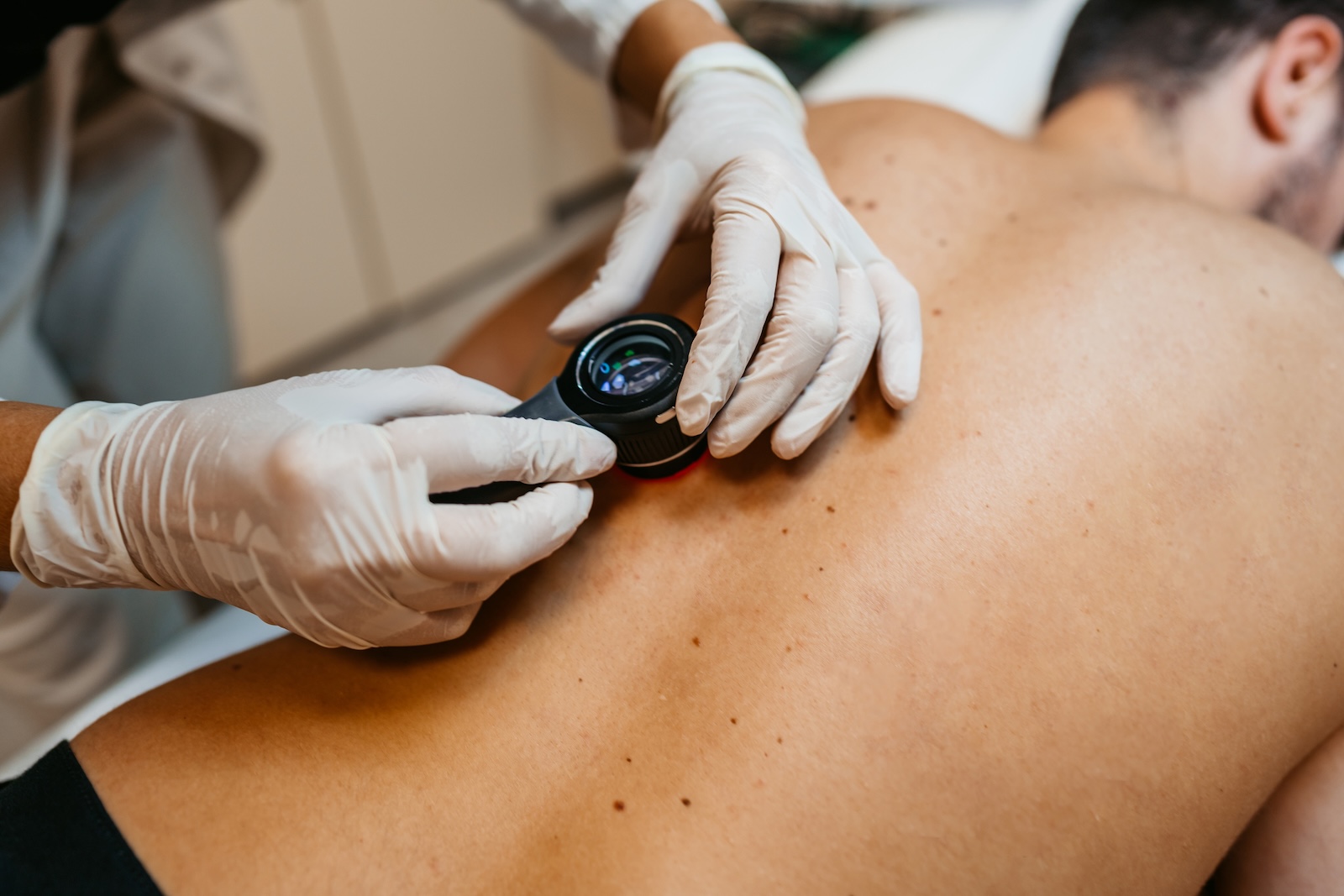
There is also the issue of self-diagnosis. Many people believe they would notice a suspicious spot on their own. The reality is that many early melanomas look unremarkable to the untrained eye. Dermoscopy, used by trained GPs and skin cancer doctors, allows for a far more accurate assessment than self-examination alone. This is why a professional skin check is so important, even for people who inspect their skin regularly.
For a more detailed look at how cancer screening saves lives across different cancers, see our post on lung cancer screening and the new Medicare-funded CT scan.
Who Should Get a Skin Cancer Check?
Skin cancer affects Australians of all ages and skin types, though certain groups carry a higher risk. You should consider booking a skin cancer check if you:
- Have fair skin, light eyes, or a tendency to burn rather than tan
- Have a personal or family history of melanoma or skin cancer
- Work or spend significant time outdoors
- Have a large number of moles or a history of atypical moles
- Have not had a skin check in the past 12 months
- Have noticed a new spot or a mole that has changed in size, shape, or colour
What Happens During a Skin Cancer Check at Knox GP?
At Knox GP, skin cancer checks are performed by experienced GPs with a special interest in skin cancer medicine. These include Dr Paul Sabeti, Dr Monirul Khan, and Dr Majid Mehdipour, who has completed further training in dermoscopy and advanced skin cancer surgery.
At your appointment, your doctor will:
- Carry out a thorough, full-body examination, including areas you cannot easily examine yourself
- Use dermoscopy to examine any suspicious spots more closely
- Explain their findings clearly and recommend next steps if needed
- Refer you for a biopsy or further investigation if a lesion requires it
The check itself is non-invasive, typically takes 15 to 30 minutes, and is bulk billed for all patients with a valid Medicare card. No referral is needed.
If a biopsy is recommended, it can often be performed at the same visit. Pathology results are generally returned within one to two weeks, after which a follow-up telehealth appointment to discuss results is also bulk billed.
Book a bulk-billed skin check at Knox GP
The skin cancer survival rate is highest when detection happens early. At Knox GP, we offer bulk-billed skin cancer checks for all eligible Medicare card holders. Book an appointment using the link below, or call us directly on 03 9100 3130.

